Arizona Real Health
Is it COVID or the Flu? The symptoms are similar….
Is it COVID or is it the flu?

Both are contagious respiratory diseases caused by viruses. COVID-19 is caused by SARS-CoV-2, while influenza is caused by influenza A and B viruses.
People with COVID-19 may lose their sense of taste or smell; that is not typical with the flu. With the flu, inflammation is largely localized to the respiratory tract. COVID, however, causes systemic inflammation. Severe lung injury is more frequent with COVID-19 because high levels of inflammation – the cytokine storm – cause damage in lungs and other organs. With COVID-19, we see blood clots and heart problems. We see multisystem inflammatory syndrome in children. The mortality rate also is higher with COVID-19 than the flu.
On the other hand, having the natural COVID infection provides longer lasting immunity than the immunity derived from the last bout of flu.
COVID Treatment
Early treatment is the most important factor for success.
Covid Treatment
The Earlier, The Better, Don’t Wait to Test Positive
We’ve learned that COVID test results aren’t always accurate. We have seen people feel ill and test negative for days, and then test positive. One patient, for example, tested daily because she had symptoms and it was not until Day 9 that she tested positive and called us for treatment.
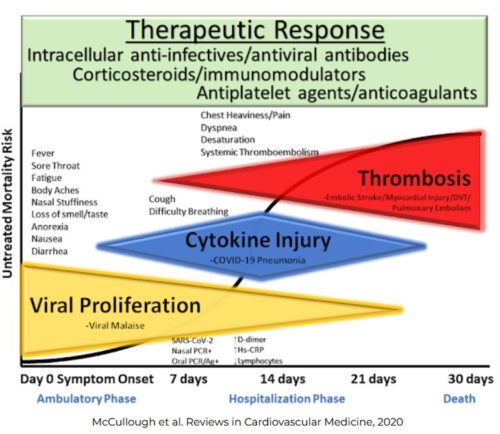
As you can see from the image below, by the time you are at Day 9, you have a more dramatic disease process going on and at that point COVID is much harder to turn around.
If you have symptoms, it is reasonable to start early treatment before you would receive a positive test. The medications typically used have been used for decades, are well understood, and treat a number of other viruses. We rarely see any side effects.

Don’t Wait to Test Positive, Treat Early!
Covid Treatment for an Active Infection
When caught early (at the first sign of flu-like symptoms) and treated with a combination of therapies, COVID-19 is a treatable disease. Early treatment is the most important factor for success.
The SARS-CoV-2 disease starts out as a viral infection and then moves through phases becoming a different kind of illness:
Phase #1: You have no symptoms at first, yet the virus is busy replicating. And the inflammatory process is beginning. This is where early treatment comes in. You want to keep the disease from progressing to the more dangerous Phases 2 and 3.
Phase #2: The immune system over-reacts and causes an exaggerated inflammatory response which can progress to a cytokine storm, causing damage to critical organs. Blood clots may form in the blood vessels and organs (lung, brain, kidney, intestines, etc.). People may have trouble breathing. They may also have chest pain, or confusion. People are admitted to the hospital if the oxygen saturation in their blood drops significantly. Steroids can be helpful in this stage.
Phase #3: Organ damage/failure. Patients can deteriorate quickly when they develop acute respiratory distress syndrome (ARDS), sepsis, and kidney and other organ failures.
That’s why the treatment options are different for each stage. And treatment options are revised as we find ourselves dealing with different variants. Remember that the elderly and those with significant co-morbidities (obesity, diabetes, heart disease, lung disease, kidney disease) may suffer more severe symptoms.
Let’s Get to Work!
Contact us by email, info@drlindawright.net, or by phone, (602) 565-9273. We’ll email you a Health History Form to fill out electronically and email back to us. When we receive that, we will call you for payment information and to schedule a telemedicine appointment with one of our doctors to get you what you need. We will also give you additional information about how you can stock your prevention and treatment toolbox.